
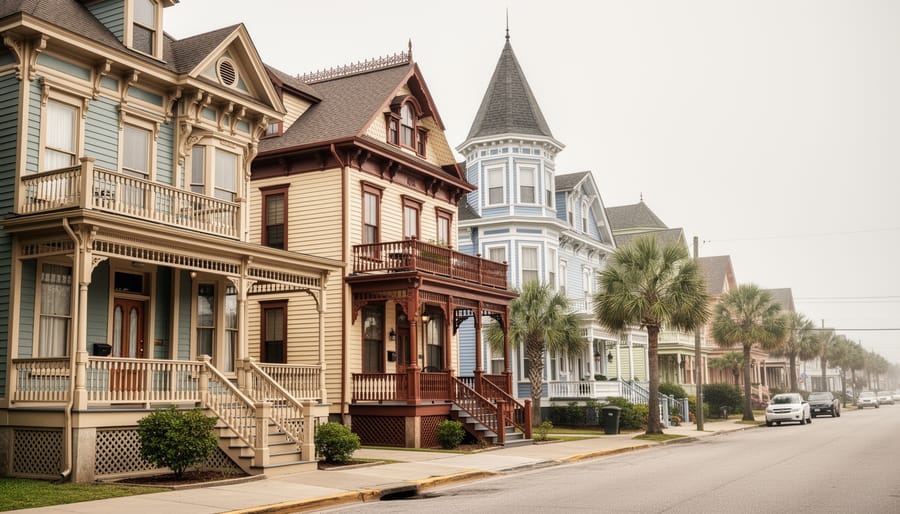
Galveston preserves the most concentrated collection of Victorian architecture in Texas, with over 1,500 historic structures spanning Italianate, Queen Anne, and Second Empire styles built during the city’s golden age as the “Wall Street of the South” between 1870 and 1900. The East End Historic District alone contains more than 40 blocks of meticulously restored homes, commercial buildings, and churches that survived the devastating 1900 hurricane, offering architecture enthusiasts an unparalleled opportunity to study late 19th-century American design in a walkable coastal setting.
What makes Galveston’s Victorian legacy distinctive is its evolution from necessity. After the Civil War, Galveston emerged as the wealthiest city in Texas, attracting railroad magnates, cotton brokers, and shipping entrepreneurs who commissioned elaborate residences to reflect their prosperity. Architect Nicholas Clayton, who designed many of the island’s most celebrated buildings, synthesized European influences with adaptations for Gulf Coast climate, creating a regional vernacular that balanced ornamental exuberance with practical considerations like high ceilings, wraparound porches, and elevated foundations.
Today, organizations like the Galveston Historical Foundation maintain this architectural heritage through ongoing restoration projects and educational programming. The district functions as both an outdoor museum and a living neighborhood, where private residences stand alongside house museums open for tours. Understanding which buildings are accessible, what architectural details to observe, and how Galveston’s unique history shaped its built environment transforms a casual visit into an immersive architectural experience.
Overview: Why Visit Galveston’s Victorian Architecture
Galveston preserves one of the largest concentrations of 19th-century commercial and residential architecture in the United States, a legacy of its dominance as Texas’s wealthiest city and busiest port during the Victorian era. Between 1870 and 1900, cotton, shipping, and banking fortunes transformed this barrier island into the financial and cultural capital of the state, attracting the period’s finest architects and craftsmen. The wealth generated during this golden age produced an extraordinary architectural legacy spanning Italianate mansions with bracketed cornices, Second Empire homes crowned by mansard roofs, and exuberant Queen Anne residences featuring turrets, wraparound porches, and elaborate decorative woodwork.
What distinguishes Galveston from other Victorian-era cities is both the breadth of its historic fabric and the unlikely story of its survival. The 1900 hurricane devastation destroyed much of the city and killed thousands, yet many substantial Victorian structures withstood the storm. Rather than demolish damaged buildings, the community raised them on jacks, sometimes by more than eight feet, and filled the island with dredged sand to lift the entire city above future storm surges. This engineering feat preserved hundreds of historic structures that might otherwise have been replaced.
The subsequent decades brought economic stagnation that inadvertently protected these buildings from demolition and inappropriate renovation. When preservation efforts gained momentum in the 1960s and 1970s, Galveston possessed intact Victorian streetscapes that had vanished in more prosperous cities. Today, six National Register historic districts encompass residential neighborhoods where you can walk block after block past ornate wooden homes, and a preserved commercial district where cast-iron facades still line the streets. This accessibility sets Galveston apart: you experience Victorian architecture not as isolated house museums but as a complete urban environment, from grand showpieces to modest worker cottages, all within easy walking or cycling distance.
Top Victorian Architecture Sites in Galveston
1. The Bishop’s Palace (Gresham House)
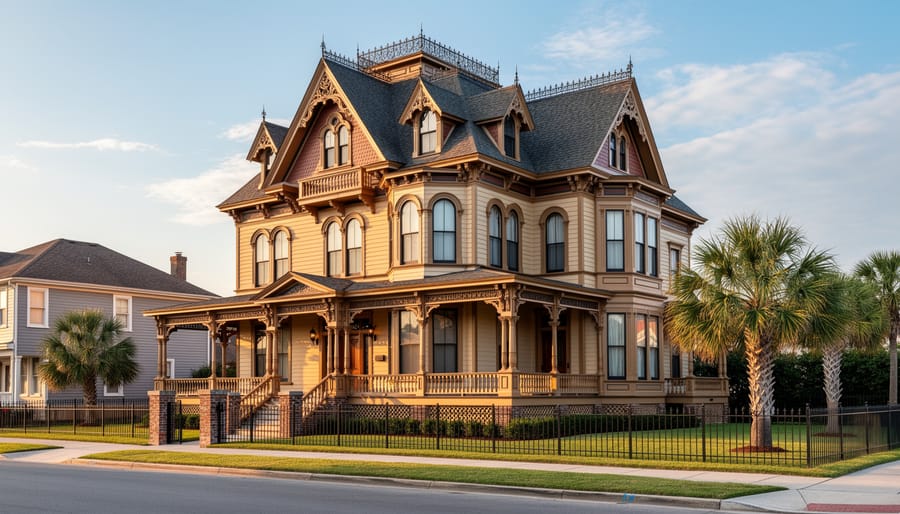
The Bishop’s Palace stands as arguably the most architecturally significant Victorian residence in Texas, a masterwork that exemplifies the prosperity and ambition of Galveston’s Gilded Age. Commissioned by attorney and congressman Colonel Walter Gresham and designed by Nicholas J. Clayton, Galveston’s most prominent architect, the mansion was completed in 1892 at a cost exceeding $250,000, an extraordinary sum that reflected both the client’s wealth and the building’s exceptional quality.
Clayton synthesized Richardsonian Romanesque and Second Empire influences to create a composition of remarkable power. The exterior presents massive rusticated stone walls, a steeply pitched slate roof punctuated by dormers and a corner tower, and deeply recessed arched openings that create dramatic shadow patterns. The asymmetrical massing and robust materiality give the structure a castle-like presence that distinguishes it from more delicate Victorian styles.
The interior craftsmanship rivals the exterior’s ambition. Visitors encounter a three-story mahogany staircase with decorative bronze torch statues, hand-carved oak and mahogany woodwork throughout principal rooms, and an extraordinary collection of stained glass. The music room features a hand-painted ceiling, while fireplaces incorporate materials ranging from Mexican onyx to Italian marble. Every surface demonstrates the era’s commitment to artisanal detail.
Since 1963, the building has operated as a museum property, now managed by the Galveston Historical Foundation. Guided tours, typically lasting 45 minutes, lead visitors through furnished rooms that showcase original architectural features alongside period-appropriate decorative arts. Tour guides provide context on both the Gresham family history and the architectural techniques employed. The property earned designation as a National Historic Landmark in 1970, recognizing its exceptional architectural significance. Visitors should expect moderate stair climbing and limited air conditioning in summer months, as preservation standards restrict modern climate control systems.
2. The Strand Historic District
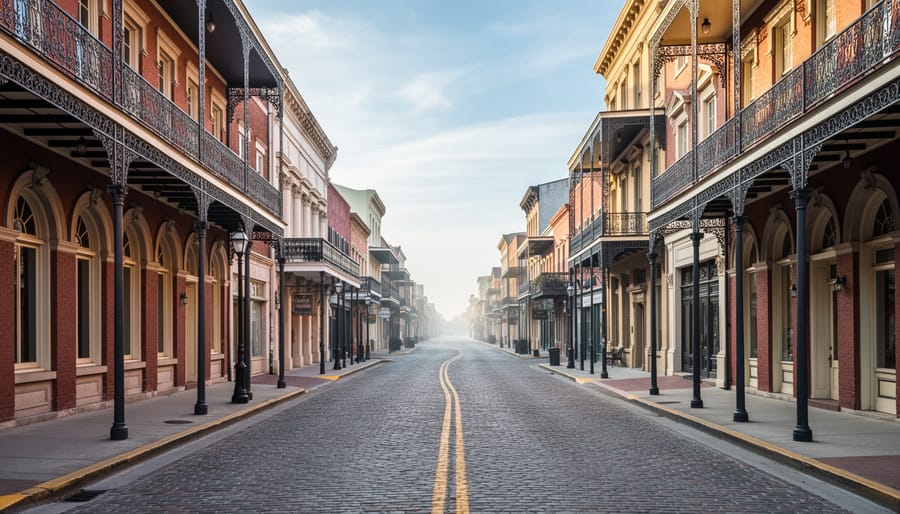
The Strand Historic District represents Galveston’s most concentrated collection of Victorian commercial architecture, spanning five blocks of cast-iron facade buildings that once powered the island’s economy. During the 1870s and 1880s, this waterfront corridor earned its nickname as the “Wall Street of the Southwest,” housing cotton brokers, shipping offices, and financial institutions that made Galveston one of America’s wealthiest cities per capita.
The district’s architectural character stems from its Italianate warehouses and commercial blocks, many constructed between 1870 and 1894. Buildings like the 1882 Hendley Building showcase the ornate cast-iron fronts manufactured by companies such as Daniel Badger’s Architectural Iron Works in New York. These prefabricated facades allowed Galveston merchants to project prosperity through elaborate columns, cornices, and window details while maintaining the functional warehouse spaces behind them.
Walking the Strand reveals layers of Victorian commercial design. The 1871 W.L. Moody Building demonstrates the typical configuration: ground-floor retail with tall display windows, upper-story offices with rhythmic fenestration, and decorative pressed-metal cornices crowning the roofline. The nearby Marx and Kempner Building exemplifies Second Empire commercial style with its mansard roof treatment, rare among Texas commercial structures.
The district’s survival owes much to economic decline following the 1900 storm and the opening of the Houston Ship Channel, which ironically prevented demolition for modern development. Beginning in the 1970s, preservation efforts transformed these neglected warehouses into boutiques, galleries, and restaurants while maintaining architectural integrity.
The Strand’s six-block core is entirely walkable in under an hour, though architecture enthusiasts should allocate twice that to examine facade details, interior spaces in converted buildings, and the secondary streets where simpler Victorian commercial structures reveal working-class architectural patterns.
3. East End Historic District
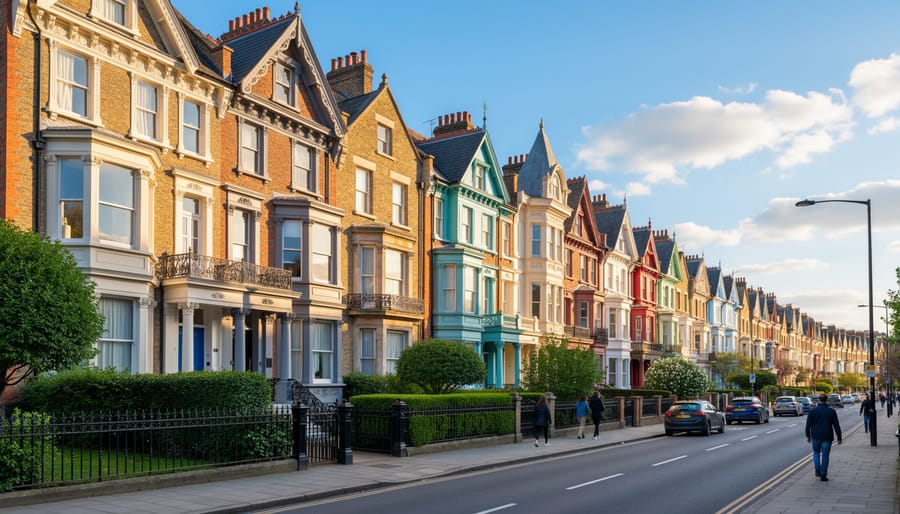
The East End Historic District represents the most extensive concentration of Victorian residential architecture in Galveston, encompassing more than 40 blocks of preserved homes that showcase the full spectrum of late 19th-century architectural styles. Unlike the commercial focus of The Strand, this neighborhood reveals how Galveston’s prosperous merchants, bankers, and shipping magnates lived during the city’s golden age.
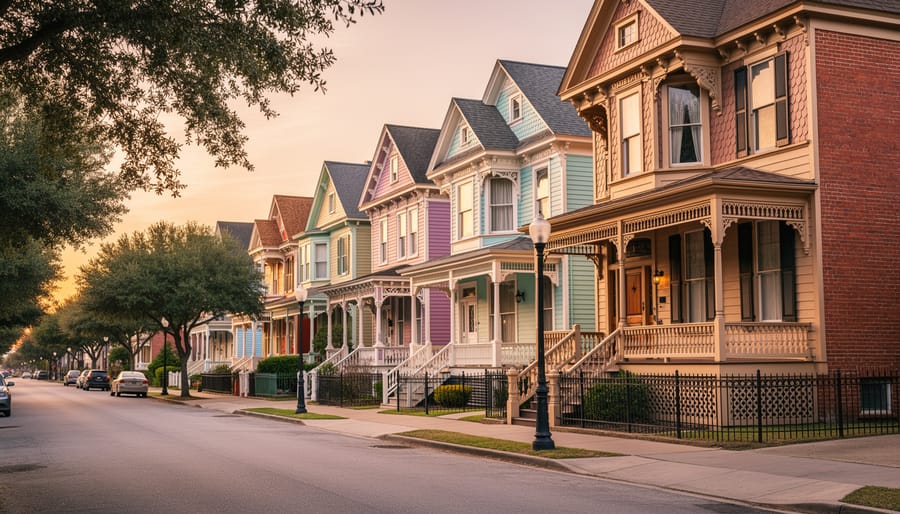
Walking these tree-lined streets, you’ll encounter an architectural catalog spanning several decades. Queen Anne houses dominate with their asymmetrical facades, wraparound porches, ornate spindle work, and corner turrets crowned with conical roofs. Italianate residences stand recognizable by their low-pitched roofs, wide overhanging eaves supported by decorative brackets, and tall, narrow windows with elaborate hoods. You’ll also find Greek Revival adaptations, Southern interpretations that added classical columns and pediments to vernacular house forms, creating a distinctly regional Victorian expression.
The district’s crown jewel is the Moody Mansion, an imposing 1895 limestone and brick residence that blends Romanesque Revival massing with lavish interior detailing. The 31-room mansion, now a museum, demonstrates how Galveston’s wealthiest families incorporated the latest architectural fashions and modern conveniences into their homes.
What makes the East End particularly rewarding for architecture enthusiasts is its walkability and the authenticity of the streetscape. The district functions as a living neighborhood, not a preserved museum zone, allowing you to observe Victorian architecture in its original urban context. The Galveston Historical Foundation provides self-guided walking tour maps identifying significant homes and architectural features. Most residences remain private, but the architectural details, gingerbread trim, stained glass transoms, decorative shingles, iron cresting, are best appreciated from the sidewalk, where you can study how individual homeowners expressed their taste and social status through architectural embellishment.
4. Ashton Villa
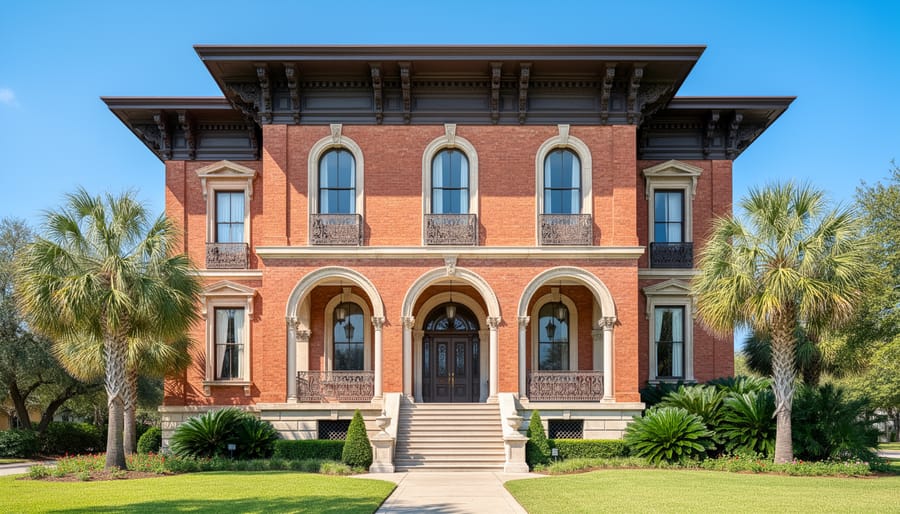
Ashton Villa stands as a testament to Galveston’s antebellum wealth and architectural ambition. Built in 1859 for hardware magnate James Moreau Brown, this Italianate mansion was among the first brick residences constructed in Texas, a bold statement in an era when wood frame construction dominated the Gulf Coast. The three-story structure features the hallmark elements of Italianate design: deeply overhanging eaves supported by ornate brackets, tall arched windows, and a symmetrical façade that projects both elegance and permanence.
The mansion survived the 1900 hurricane remarkably intact, serving various functions throughout the 20th century before narrowly escaping demolition in the 1970s. The Galveston Historical Foundation’s acquisition and meticulous restoration saved not just the building but also significant collections of original furnishings, wallpapers, and decorative elements that provide rare insight into Victorian-era domestic life in Texas.
Today’s museum tours reveal the mansion’s gold leaf ceiling moldings, Italian marble mantels, and the Browns’ impressive collection of period furniture and artwork. The restored interiors showcase how wealthy Galvestonians lived during the city’s golden age as Texas’s primary port. The second-floor Gold Room, with its elaborate plasterwork and crystal chandeliers, exemplifies the refined taste that characterized Galveston’s merchant class.
Pay attention to the architectural details that distinguish Ashton Villa from later Victorian styles, the restrained ornamentation and classical proportions reflect the Italianate movement’s Renaissance influences rather than the exuberance of Queen Anne designs that would follow decades later.
5. Silk Stocking Historic District
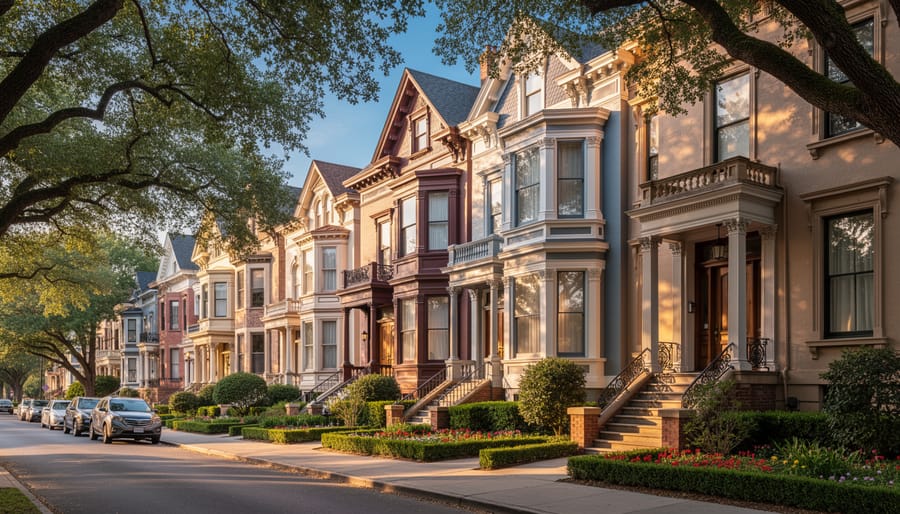
The Silk Stocking Historic District earned its evocative name from the wealthy families who once strolled its tree-canopied boulevards in fine hosiery, and the neighborhood’s architecture still reflects that turn-of-the-century prosperity. Bounded roughly by Broadway to the south and stretching north toward the bay, this residential enclave showcases some of Galveston’s most elaborate Queen Anne residences alongside dignified Colonial Revival mansions, many designed by prominent architects rather than built from pattern books.
What sets this district apart is the sheer concentration of high-style homes featuring architectural flourishes that went beyond functional necessity. You’ll encounter wraparound porches with turned spindle work, fish-scale shingles in contrasting colors, polygonal bay windows, and corner turrets capped with finials. The Queen Anne examples here demonstrate the style’s characteristic asymmetry and exuberant ornament, multiple roof planes, decorative gables with sunburst patterns, and stained glass transoms that catch the afternoon light.
The Colonial Revival homes present a contrasting formality, with their symmetrical facades, classical columns, and Palladian windows, representing the architectural shift that occurred as the Victorian era gave way to the early twentieth century.
Unlike the more compact East End district, the Silk Stocking neighborhood’s wider lots and mature live oaks create a parklike atmosphere. The streets themselves, Broadway, Winnie, Ball, offer continuous architectural interest across multiple blocks. While most residences remain private homes, the exteriors provide rich study material for understanding how Galveston’s elite commissioned architect-designed statements of status and taste during the city’s gilded age.
6. The Grand 1894 Opera House
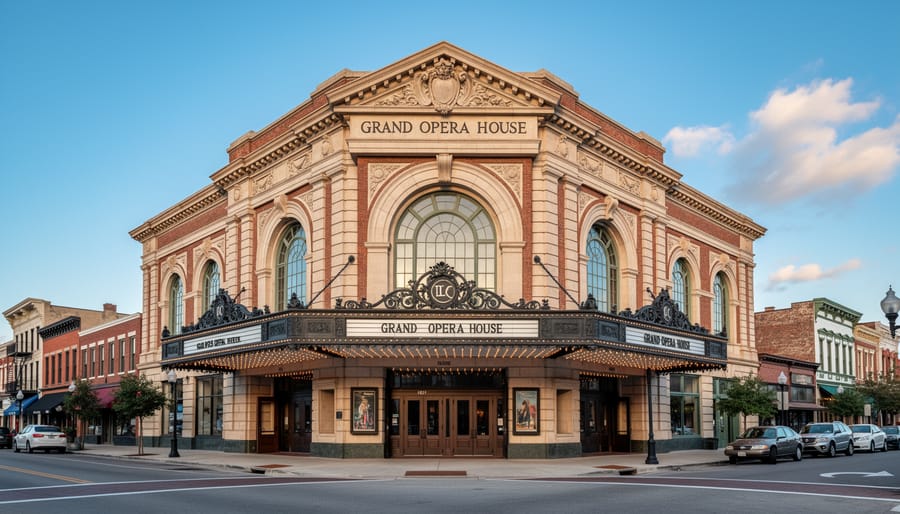
The Grand 1894 Opera House stands as Galveston’s premiere example of Victorian theater architecture, a building type that represented civic pride and cultural sophistication in 19th-century America. Designed by architect Nicholas J. Clayton and completed in 1894, this three-story brick structure combines Richardson Romanesque exterior massing with elaborate Victorian interior detailing tailored specifically for theatrical performance.
The building’s facade features Clayton’s signature rounded arches and rusticated stonework, establishing monumental presence on Postoffice Street while maintaining human-scaled street engagement through its ground-level commercial storefronts, a common Victorian approach to urban theater design. The exterior modesty deliberately contrasts with the interior opulence, a theatrical convention that heightened the transformative experience of entering the performance space.
Inside, the 1,040-seat auditorium showcases Victorian acoustical engineering principles. The horseshoe-shaped balcony, ornamental plasterwork ceiling medallions, and wood paneling weren’t merely decorative, these elements controlled sound reflection and absorption before modern amplification technology. Original box seats along the side walls maintain the 19th-century social hierarchy of theater attendance while providing excellent sightlines through the raked floor design.
What distinguishes this structure architecturally is its continuing function as an active performance venue. Unlike house museums preserved in static historical states, the Opera House demonstrates how Victorian civic buildings can adapt to contemporary use while retaining architectural integrity. Recent restorations balanced historical accuracy in decorative elements with updated technical systems, illustrating practical preservation challenges in working historic buildings.
7. Williams-Tucker House and Samuel May Williams House
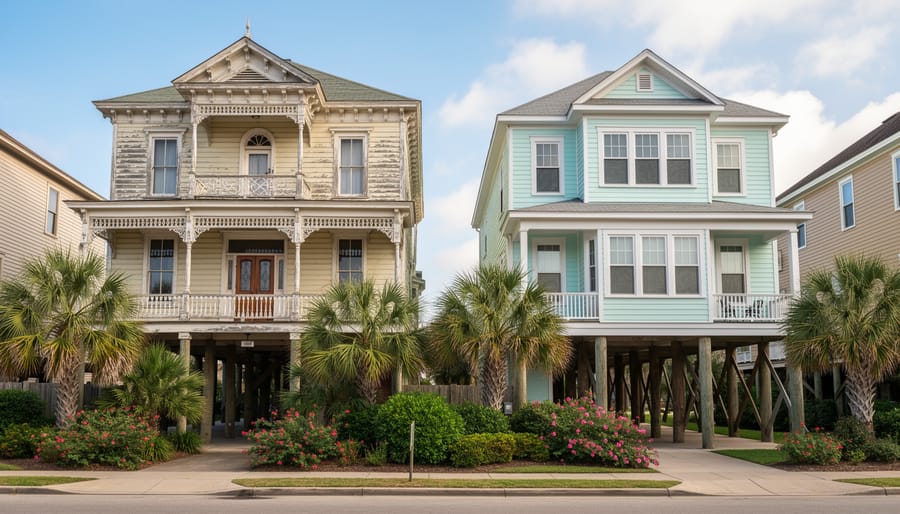
These adjacent properties on Avenue P tell the story of Galveston’s architectural evolution across half a century. The Samuel May Williams House, built in 1839, predates the Victorian era but establishes the architectural foundation from which the city’s later styles emerged. This Greek Revival cottage represents the restrained elegance of Galveston’s Republic of Texas period, with its simple massing, horizontal emphasis, and classical proportions that would influence Victorian adaptations throughout the island.
The Williams-Tucker House, constructed in 1883, demonstrates how Victorian tastes transformed residential design. Where the earlier Williams residence favored symmetry and classical restraint, the Tucker house embraces the asymmetrical massing, decorative gables, and ornamental detailing characteristic of the Victorian aesthetic. The contrast between the two structures illustrates the shift from Greek Revival austerity to Victorian exuberance, a transition visible throughout Galveston’s historic districts.
Both properties connect to the Williams family, among Galveston’s most influential founding families. Samuel May Williams served as secretary to Stephen F. Austin and helped establish Galveston as a commercial center. The juxtaposition of these houses, now operated as museum properties, provides architectural historians a unique opportunity to examine stylistic evolution on a single site. Notice the progression in window treatments, roofline complexity, and surface ornamentation between the two structures, physical evidence of changing architectural philosophies and construction technologies across the Victorian transformation of American domestic architecture.
Practical Information for Visiting
Planning your architectural visit to Galveston requires understanding seasonal variations and practical logistics. Spring (March through May) and fall (October through November) offer the most comfortable weather for extensive walking tours, with mild temperatures and lower humidity than summer months. For photography enthusiasts, early morning light between 8 and 10 a.m. illuminates Victorian facades beautifully, while late afternoon produces dramatic shadows that emphasize architectural details. Winter visits remain viable, though occasional cold fronts may limit outdoor exploration.
Transportation options within Galveston’s historic districts are straightforward. Street parking is widely available throughout the East End and Silk Stocking districts, with most residential streets offering free curbside parking. The Strand district has metered parking and several paid lots. The Island Transit trolley provides free service along key routes connecting major historic sites, though service frequencies vary seasonally. Bicycle rentals from several downtown vendors offer an efficient way to cover multiple districts in a single day, with flat terrain and designated bike lanes making cycling accessible for most fitness levels.
Tour format significantly affects your architectural experience. Self-guided exploration allows flexibility and extended time studying exterior details, aided by printed walking tour maps available from the Galveston Historical Foundation visitor center. Organized architectural tours, typically offered on weekends, provide expert commentary and historical context that reveal design details easily overlooked independently.
House museum properties vary in access and cost:
| Property | Tour Availability | Admission | Primary Style |
|---|---|---|---|
| Bishop’s Palace | Daily guided tours | $15-18 | Richardsonian Romanesque |
| Moody Mansion | Daily guided tours | $15-18 | Romanesque Revival |
| Ashton Villa | Seasonal hours | $12-15 | Italianate |
| 1892 Bishop’s Palace | Self-guided available | Varies | Queen Anne |
The Galveston Historical Foundation manages most significant Victorian properties and coordinates preservation standards across the city’s historic districts. Their visitor center at 2228 Broadway provides maps, current tour schedules, and combination tickets that reduce costs when visiting multiple properties. Most house museums offer wheelchair accessibility on ground floors, though upper-level access varies due to historic staircase configurations. Advance booking is recommended for weekend visits during peak spring and fall seasons.
Local Tips for Architecture Enthusiasts
Start early on weekend mornings to photograph Galveston’s Victorian districts in soft light and avoid midday crowds. The golden hour between 7-9 AM offers ideal conditions for capturing architectural details without harsh shadows, and you’ll have clearer sidewalk shots of significant facades. Most house museums open at 10 AM, so use the early hours for exterior documentation in residential areas.
Connect the East End Historic District with the Silk Stocking District via a walking route along Broadway, which passes numerous transitional examples and allows you to observe how architectural styles evolved across different decades. This 2.5-mile route takes about three hours with frequent stops and provides context that isolated visits to individual properties cannot match. The Galveston Historical Foundation’s “Architectural Walking Tours” guidebook, available at the Bishop’s Palace gift shop and online, includes detailed maps with architectural style notations for each block.
Essential strategies for architecture enthusiasts:
- Bring a 50mm or 24-70mm lens to capture both full facades and intricate millwork details without distortion
- Learn to identify Italianate brackets, Queen Anne turrets, and Second Empire mansard roofs before your visit using the GHF’s style glossary
- Schedule house museum tours before 2 PM to allow afternoon hours for self-guided district walks and photography
- Download the Galveston Historical Foundation mobile app for on-demand architectural information at specific addresses
- Respect private residences by photographing from public sidewalks only and avoiding intrusive close-ups of windows
Annual events provide exceptional access to normally private interiors. The Galveston Historic Homes Tour each May opens 6-8 significant Victorian residences with volunteer docents explaining restoration decisions and original versus reproduction elements. The AIA Houston Galveston Tour, typically held in spring, focuses specifically on architectural analysis with practicing architects leading discussions.
Distinguish authentic Victorian fabric by examining window glass (original panes show subtle waves), examining paint layers at discrete locations (Victorian homes rarely used bright white trim), and checking foundation details (piers versus solid foundations indicate pre- or post-1900 construction). The Rosenberg Library’s Texas History Center maintains historic photographs, Sanborn maps, and building records that document original appearances, essential for serious research.
Combine architectural visits with the Galveston Arts Center, housed in the 1878 First National Bank building, to see adaptive reuse of Victorian commercial architecture alongside contemporary exhibitions.
Expert Perspective: Preserving Galveston’s Victorian Heritage
Daron Acker, Director of Architectural Preservation at the Galveston Historical Foundation, works daily with the unique challenges of maintaining nineteenth-century structures in an aggressive coastal environment. “Salt air and humidity are relentless enemies of historic buildings,” he explains. “We’re constantly fighting moisture intrusion, wood rot, and metal corrosion, issues that would be manageable in a landlocked city but require extraordinary vigilance here.”
The Foundation employs specialized restoration techniques that balance historical authenticity with practical durability. Original materials are prioritized wherever possible, but Acker notes that compromises sometimes become necessary. “We might use modern sealants behind historic moldings or install concealed ventilation systems to manage moisture. The goal is preservation that functions, not just preservation that looks correct on paper.”
Funding remains a perpetual challenge. The Foundation manages fourteen museum properties and assists with dozens of private restorations annually, relying on admissions, memberships, grants, and the occasional transformative donation. Storm damage adds unpredictable costs, even tropical storms that don’t make headlines can inflict serious harm through wind-driven rain and flooding.
What makes the effort worthwhile, according to Acker, is Galveston’s unmatched architectural density. “Very few American cities preserved this much intact Victorian fabric in such a concentrated area. Charleston has individual gems, San Francisco lost much of its collection in 1906, but Galveston offers entire streetscapes where you can walk through the 1880s and 1890s. That contextual integrity is irreplaceable.”
He encourages visitors to understand that preservation isn’t static. “Every restored building represents ongoing work, replacing deteriorated elements, repainting, monitoring for problems. These structures survived because people invested in them continuously, not just once.”
Frequently Asked Questions
How long should I allocate for an architectural visit to Galveston?
Plan a minimum of one full day to tour the major house museums and walk through one or two historic districts. Architecture enthusiasts often spend two to three days to thoroughly explore the East End, Strand, and Silk Stocking districts while visiting interior museum properties.
Can you tour the interiors of private Victorian homes?
Most Victorian residences in Galveston remain private and cannot be entered, though you can view exteriors from public streets. The Galveston Historical Foundation operates several house museums that offer interior tours, and the annual Historic Homes Tour in May provides rare access to select private residences.
Are guided architectural tours available?
Yes, the Galveston Historical Foundation offers guided walking tours of the Strand and East End districts, and several local tour companies provide architectural-focused excursions. Self-guided options include printed walking tour maps and the Foundation’s mobile app with GPS-enabled architectural commentary.
How did so many Victorian buildings survive the devastating 1900 hurricane?
While the storm destroyed approximately 3,600 structures, many brick and masonry Victorian buildings in higher elevations withstood the surge. Post-storm efforts raised the entire island’s grade level and strengthened surviving structures, contributing to the remarkable preservation of the architectural heritage we see today.
Understanding the distinctions between Galveston’s historic districts helps you plan your visit efficiently. The Strand focuses on commercial Victorian architecture with cast-iron facades and warehouse buildings, while the East End and Silk Stocking districts showcase residential styles. When you compare districts you notice that each area represents different economic classes and architectural priorities of 19th-century Galveston society. Restoration work throughout the city follows the Secretary of the Interior’s Standards for Rehabilitation, ensuring that repairs and adaptations preserve original architectural character while allowing buildings to function in contemporary use.
Galveston stands as an irreplaceable archive of Victorian architecture, offering a depth and authenticity rarely found in American cities. The concentration of intact 19th-century buildings, from grand Italianate mansions to modest Queen Anne cottages, creates a living museum that rewards sustained exploration. While landmarks like the Bishop’s Palace and Ashton Villa provide essential anchors, the real revelation comes from wandering the residential streets of the East End and Silk Stocking districts, where block after block reveals the textures of Victorian life.
For Houston-area enthusiasts, Galveston represents the closest opportunity to study comprehensive Victorian urbanism, complementing the city’s own scattered examples and diverse architectural neighborhoods. The island’s preservation successes demonstrate what’s possible when communities commit to protecting their built heritage, offering lessons applicable to coastal cities across the Gulf region. Whether you’re documenting cast-iron storefronts on The Strand or sketching gingerbread trim in residential districts, Galveston delivers an architectural experience that deepens with each visit.